

How to Help a Child with Anxiety: 10 Therapist-Approved Strategies That Actually Work
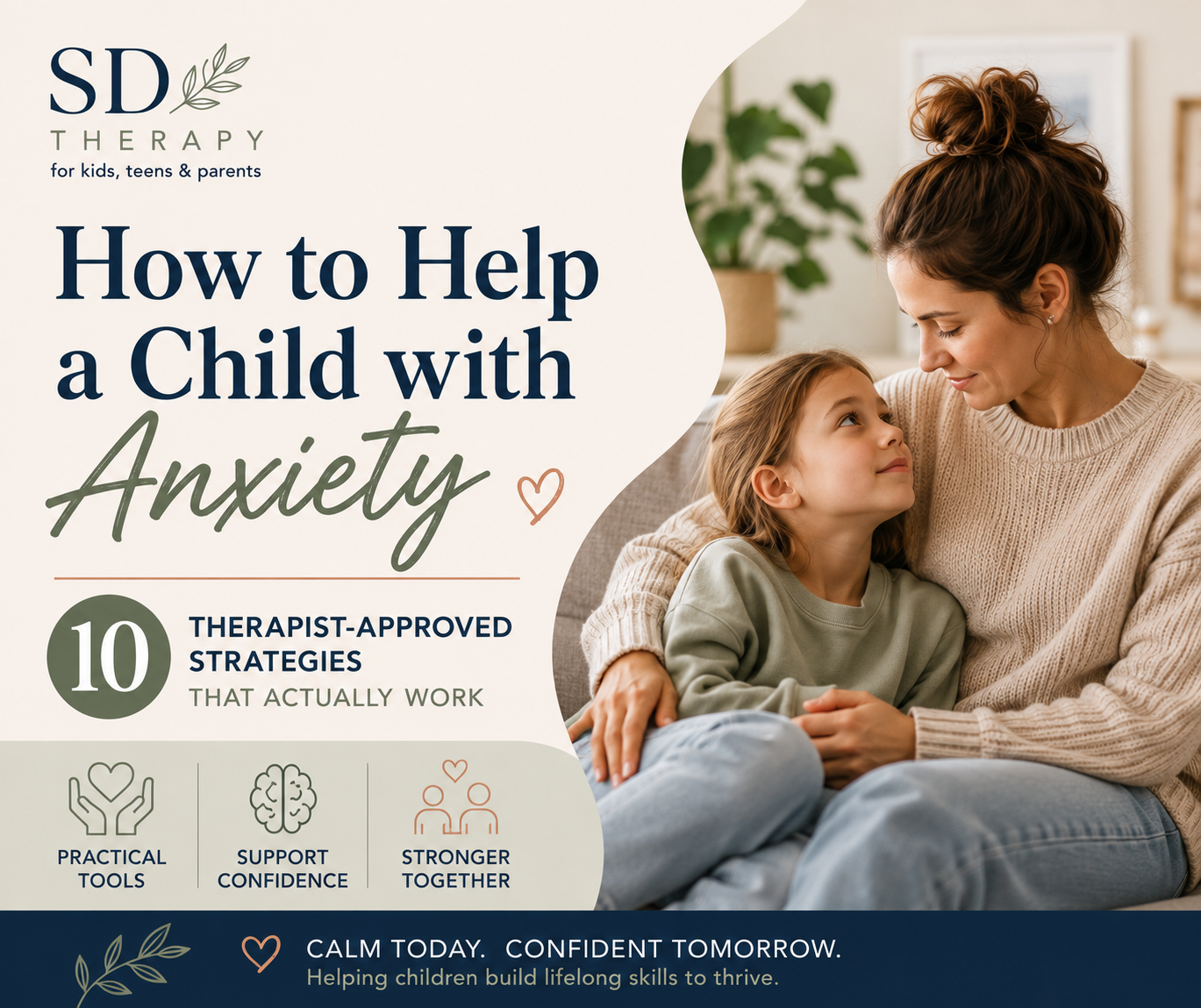
Watching your child struggle with anxiety can leave you feeling helpless.
You want to take away their worries, reassure them that everything will be okay, and protect them from anything that causes fear or stress. Every parent wants to see their child happy, confident, and thriving.
But anxiety isn't something we can simply make disappear.
The good news is that children can learn to manage anxiety. With the right support, they can build confidence, develop healthy coping skills, and discover that they are capable of handling difficult situations—even when they feel nervous.
If your child struggles with anxiety, these therapist-approved strategies can help.
First, What Does Anxiety Look Like in Children?
Anxiety doesn't always look the way parents expect.
Some children openly express their worries, while others become quiet, irritable, or avoid situations that make them uncomfortable.
Common signs of anxiety include:
Frequent worrying
Difficulty sleeping
Stomachaches or headaches with no medical cause
Avoiding school or social situations
Perfectionism
Clinginess
Irritability
Trouble concentrating
Frequent reassurance-seeking
Emotional outbursts
Every child experiences anxiety differently, which is why it's important to focus on patterns rather than isolated incidents.
Why Reassurance Doesn't Always Help
When children are anxious, our instinct is often to say:
"You'll be fine."
"Don't worry."
"There's nothing to be afraid of."
While these responses come from a place of love, they often provide only temporary relief.
Children may begin relying on reassurance to reduce anxiety instead of learning that they can tolerate uncertainty and work through uncomfortable feelings on their own.
The goal isn't to eliminate anxiety.
The goal is to help your child feel confident in their ability to handle it.
10 Therapist-Approved Strategies to Help an Anxious Child
1. Validate Their Feelings
Instead of dismissing anxiety, acknowledge it.
Try saying:
"I can see you're feeling nervous. That makes sense."
Feeling understood helps children regulate emotions more effectively.
2. Stay Calm Yourself
Children often take emotional cues from the adults around them.
If you respond with calm confidence, you're teaching your child that difficult emotions can be managed.
Your calm becomes their calm.
3. Encourage Brave Steps
Avoiding anxiety makes it stronger.
Instead of removing every challenge, help your child face fears gradually.
Small successes build confidence over time.
For example:
Instead of skipping a birthday party entirely, your child might attend for just 20 minutes.
Each successful experience teaches their brain:
"I can do hard things."
4. Create Predictable Routines
Anxiety often increases when life feels uncertain.
Consistent routines around mornings, homework, meals, and bedtime help children feel safe and secure.
Predictability creates emotional stability.
5. Teach Calming Skills Before They're Needed
It's much easier to practice coping skills when children are calm than during a meltdown.
Practice together:
Deep breathing
Progressive muscle relaxation
Mindfulness exercises
Grounding techniques
Visualization
These tools become easier to use during stressful moments with repetition.
6. Focus on Progress, Not Perfection
Children with anxiety often place enormous pressure on themselves.
Celebrate effort instead of outcomes.
Rather than saying:
"You got an A!"
Try:
"I'm proud of how hard you worked."
This builds resilience instead of perfectionism.
7. Help Them Problem-Solve
Instead of immediately solving problems for your child, ask:
"What do you think might help?"
"What's one small step you could take?"
Problem-solving builds confidence and independence.
8. Model Healthy Coping
Children learn far more from what we do than what we say.
Let them hear you model healthy coping:
"I'm feeling stressed today, so I'm going to take a few deep breaths before I respond."
You're teaching emotional regulation in real time.
9. Limit the Reassurance Cycle
Repeated reassurance may unintentionally strengthen anxiety.
Instead of answering the same worry over and over, gently shift the focus:
"I know your brain is asking for certainty right now. What coping skill could help you feel a little more confident?"
Over time, this encourages children to trust themselves rather than relying solely on reassurance.
10. Know When to Seek Professional Support
Sometimes anxiety becomes more than children can manage on their own.
Consider reaching out to a mental health professional if anxiety is:
Interfering with school
Affecting friendships
Causing frequent physical complaints
Leading to panic attacks
Preventing participation in everyday activities
Persisting despite your support at home
Early intervention can make a meaningful difference.
What Therapy Can Do
Therapy doesn't teach children to stop feeling anxious.
Instead, it helps them:
Understand their emotions
Build healthy coping strategies
Increase confidence
Improve emotional regulation
Strengthen communication skills
Develop resilience
These are lifelong skills that benefit children well beyond childhood.
Supporting Your Child Starts with Connection
One of the most powerful things you can offer your child isn't the perfect answer.
It's your presence.
Children don't need parents who remove every obstacle.
They need parents who communicate:
"I believe in you."
"I'm here with you."
"We'll figure this out together."
That message helps children develop the confidence to face challenges long after childhood.
How Dr. Lindsay O’Shea with SD Therapy Can Help
At SD Therapy, we provide compassionate, evidence-based telehealth therapy for children, teens, and parents throughout California.
Whether your child is experiencing anxiety, school stress, emotional overwhelm, or difficulty coping with life's challenges, we're here to help.
Together, we'll help your child build the confidence, resilience, and coping skills they need to thrive.
Ready to Take the Next Step?
If you're wondering whether your child's anxiety has become more than everyday worry, you don't have to figure it out alone.
Contact SD Therapy to schedule a consultation and learn how we can support your child and family.