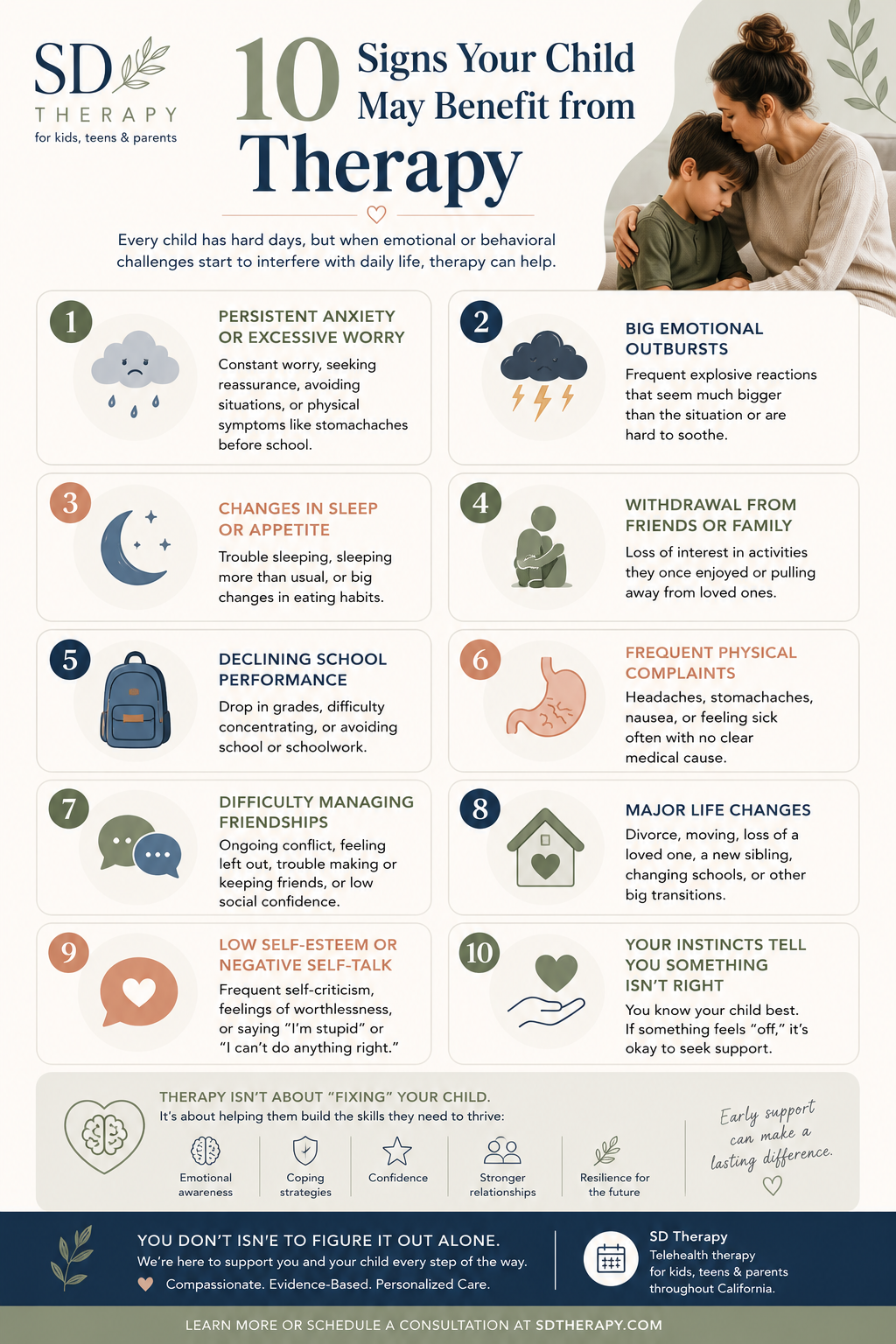

10 Signs Your Child May Benefit from Therapy

As a parent, you know your child better than anyone.
You notice the subtle changes—the increased irritability, the quiet withdrawal, the tears that seem to come out of nowhere, or the growing anxiety about school, friendships, or everyday life.
Many parents wonder:
"Is this just a phase?"
"Am I overreacting?"
"Should I wait and see if things improve?"
These questions are incredibly common.
The truth is, every child experiences difficult emotions. Feeling sad, worried, frustrated, or overwhelmed is a normal part of growing up.
The difference is how long those struggles last, how intense they become, and whether they're interfering with your child's daily life.
Therapy isn't only for children experiencing a crisis. It can also provide children with healthy coping skills, emotional support, and confidence before small challenges become larger ones.
Here are ten signs it may be time to consider reaching out.
1. Persistent Anxiety or Excessive Worry
Does your child worry about things most children their age don't seem concerned about?
They may constantly ask for reassurance, struggle with separation, avoid new situations, or experience physical symptoms like stomachaches before school.
While occasional nervousness is normal, ongoing anxiety that interferes with everyday activities deserves attention.
2. Big Emotional Outbursts
All children have meltdowns from time to time.
However, if your child frequently has explosive reactions that seem much bigger than the situation, they may be struggling with emotional regulation.
Therapy can help children recognize emotions earlier, communicate their needs, and develop healthier ways to cope.
3. Changes in Sleep or Appetite
Emotional struggles often show up physically.
Pay attention if your child begins:
Having trouble falling asleep
Waking frequently
Sleeping significantly more than usual
Eating much more or much less than normal
These changes can sometimes be signs of anxiety, depression, or increased stress.
4. Withdrawal from Friends or Family
Has your child stopped participating in activities they once loved?
Do they spend more time alone or avoid interacting with family members?
While everyone needs downtime, persistent withdrawal may signal emotional distress.
5. Declining School Performance
A sudden drop in grades, difficulty concentrating, school avoidance, or frequent complaints about going to school can sometimes reflect emotional challenges rather than academic ability.
Children who are anxious, overwhelmed, or struggling emotionally often have difficulty learning because their brains are focused on managing stress.
6. Frequent Physical Complaints
Children don't always have the words to express emotional pain.
Instead, they may complain about:
Stomachaches
Headaches
Nausea
Feeling sick before school or social activities
If medical evaluations don't identify a physical cause, stress or anxiety may be contributing.
7. Difficulty Managing Friendships
Friendships become increasingly important as children grow.
If your child frequently experiences conflict, feels left out, struggles with social confidence, or has difficulty reading social situations, therapy can help them build communication skills and stronger relationships.
8. Major Life Changes
Children often benefit from additional support during transitions such as:
Divorce or separation
Moving
Changing schools
Loss of a loved one
A new sibling
Blended families
Illness within the family
Even positive changes can feel overwhelming.
Therapy provides a safe space to process these experiences.
9. Low Self-Esteem or Negative Self-Talk
Listen carefully to how your child talks about themselves.
Statements like:
"I'm stupid."
"Nobody likes me."
"I can't do anything right."
should never be dismissed.
Children who develop a negative inner voice often benefit from learning healthier ways to think about themselves and build confidence.
10. Your Parent Instinct Tells You Something Isn't Right
This may be the most important sign of all.
Parents often notice subtle changes long before anyone else does.
If your child simply doesn't seem like themselves, trust your instincts.
You don't need to wait until things become severe before seeking support.
Sometimes one conversation with a mental health professional can provide reassurance, guidance, and clarity.
Therapy Isn't About "Fixing" Your Child
One of the biggest misconceptions about therapy is that it means something is "wrong."
In reality, therapy helps children learn lifelong emotional skills.
Children can develop:
Healthy coping strategies
Emotional awareness
Confidence
Problem-solving skills
Communication skills
Resilience
Healthy relationships
These are skills that benefit them not only today, but throughout adolescence and adulthood.
What Happens During Child Therapy?
Many parents worry that therapy will feel intimidating or clinical.
Instead, therapy is designed to meet children where they are.
Depending on your child's age, sessions may include:
Play-based activities
Creative expression
Conversation
Skill-building exercises
Emotional regulation strategies
Parent collaboration and guidance
Our goal is to create a safe, supportive environment where children feel understood while learning practical tools they can use in everyday life.
When Should You Reach Out?
You don't have to wait for a crisis.
If your child's emotions, behaviors, or stress are affecting their happiness, relationships, or daily functioning, seeking support early can make a meaningful difference.
Early intervention often helps children develop healthy coping skills before challenges become more difficult to manage.
How Dr. Lindsay O’Shea with SD Therapy Can Help
At SD Therapy, we provide compassionate, evidence-based therapy for children, teens, and parents throughout California via secure telehealth.
Whether your child is experiencing anxiety, emotional overwhelm, school-related stress, friendship challenges, or difficulty navigating life's transitions, we're here to help.
Together, we'll work to understand what's going on beneath the surface and build the skills your child needs to feel more confident, connected, and resilient.
Ready to Take the First Step?
If you're wondering whether therapy is the right fit for your child, you don't have to figure it out alone.
Contact SD Therapy to schedule a consultation and learn how we can support your child and family.