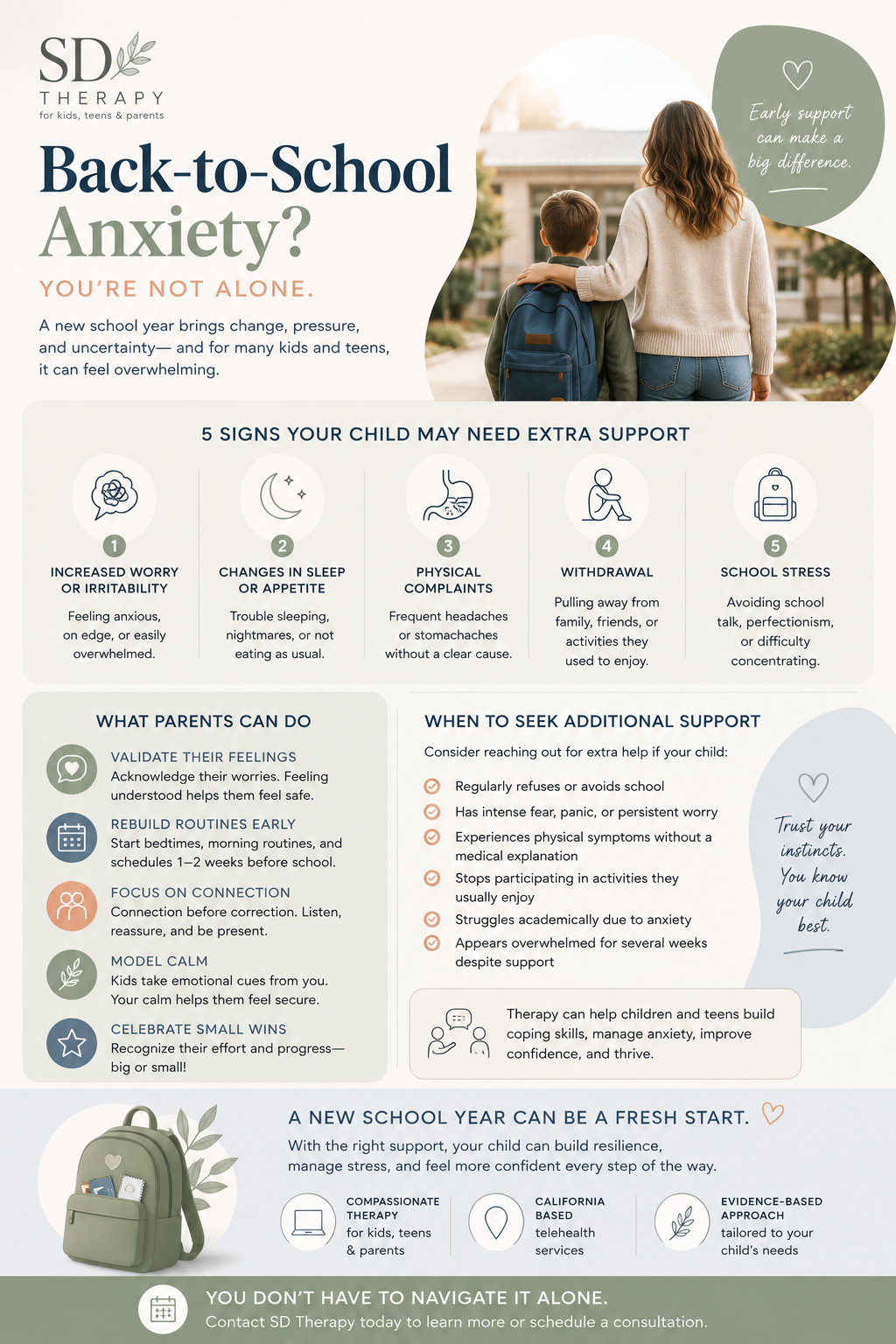

Back-to-School Anxiety: When Are "First Day Jitters" More Than Just a Phase?

The start of a new school year brings fresh opportunities—but for many children and teens, it also brings stress, uncertainty, and anxiety.
As a parent, you may notice your child becoming more emotional, clingy, irritable, or withdrawn as summer comes to an end. You might wonder:
"Are they just nervous about going back to school?"
"Is this normal?"
"Or is something else going on?"
These are common questions, and the answer isn't always straightforward.
The good news is that some nervousness is completely normal. Starting a new grade, meeting new teachers, navigating friendships, and adjusting to new expectations can feel overwhelming for children of all ages.
However, when anxiety begins interfering with your child's daily life, it may be time to take a closer look.
What Does Back-to-School Anxiety Look Like?
Children don't always have the words to say, "I'm anxious."
Instead, anxiety often shows up through behaviors.
Some common signs include:
Frequent stomachaches or headaches before school
Difficulty falling asleep or staying asleep
Increased irritability or emotional outbursts
Clinginess or separation anxiety
Avoiding conversations about school
Withdrawing from friends or family
Perfectionism or excessive worry about grades
Difficulty concentrating
Frequent reassurance-seeking
Changes in appetite
For teenagers, anxiety may look different.
Instead of appearing worried, they may seem angry, shut down, unmotivated, or increasingly isolated. Some teens become highly critical of themselves or avoid situations that make them uncomfortable.
These behaviors are often misunderstood as laziness, defiance, or moodiness when they're actually signs that your teen is struggling internally.
Why Is Back-to-School So Stressful?
The beginning of the school year involves multiple transitions happening all at once.
Children and teens may be adjusting to:
New teachers
New classmates
Increased academic expectations
Social pressures
Busy schedules
Less free time
Extracurricular activities
Fear of making mistakes
Returning after a difficult previous school year
Even children who are excited about school can feel overwhelmed by so many changes occurring simultaneously.
Transitions require emotional energy—and some kids naturally need more support than others.
When Should Parents Be Concerned?
It's normal for anxiety to spike briefly before school starts.
What's more important is how long it lasts and how much it interferes with everyday life.
Consider seeking additional support if your child:
Regularly refuses or avoids school
Experiences panic attacks or intense fear
Has persistent physical complaints without a medical explanation
Stops participating in activities they previously enjoyed
Struggles academically because anxiety is interfering with concentration
Has difficulty making or maintaining friendships
Appears overwhelmed for several weeks despite reassurance and support
You know your child better than anyone else.
If something feels different, it's worth paying attention.
Trusting your instincts doesn't mean you're overreacting—it means you're being an attentive parent.
What Parents Can Do at Home
While you can't eliminate every source of stress, you can help your child feel more prepared and emotionally secure.
Here are a few strategies that can make a meaningful difference:
Validate Their Feelings
Instead of saying:
"There's nothing to worry about."
Try:
"It makes sense that you're feeling nervous. New school years can feel like a big change."
Feeling understood helps children regulate their emotions more effectively.
Rebuild Routines Early
Begin shifting bedtime, wake-up times, and daily routines one to two weeks before school starts.
Predictability helps reduce anxiety.
Focus on Connection Before Correction
When emotions run high, children need connection before problem-solving.
Sometimes sitting together, listening without judgment, and offering reassurance is far more effective than trying to "fix" the problem.
Avoid Passing Along Your Own Anxiety
Children are incredibly perceptive.
If you're feeling stressed about schedules, academics, or the school year, try to model calm confidence whenever possible.
Your emotional state often becomes their emotional barometer.
Celebrate Small Wins
Confidence grows through success.
Recognize even small accomplishments like attending orientation, packing a backpack independently, or making it through the first week of school.
How Therapy Can Help
Therapy isn't only for children experiencing severe emotional difficulties.
It can also help children and teens:
Develop healthy coping skills
Build emotional resilience
Improve confidence
Learn to manage anxiety
Strengthen communication
Navigate friendships
Reduce perfectionism
Feel more prepared for life's challenges
Early support often prevents small concerns from becoming larger ones over time.
You're Not Alone
If your child seems more anxious as the school year approaches, know that you're far from alone.
Back-to-school transitions can be challenging, but with the right support, children and teens can learn to manage anxiety, build confidence, and thrive both academically and emotionally.
If you're wondering whether therapy may be helpful, we're here to answer your questions and help you determine the next best step.
At SD Therapy, we provide compassionate, evidence-based therapy for children, teens, and parents throughout California via secure telehealth.
Ready to Support Your Child This School Year?
Whether your child is experiencing anxiety, emotional overwhelm, or difficulty adjusting to change, you don't have to navigate it alone.
Reach out today to learn more about our services or schedule a consultation. Together, we can help your child enter the new school year with greater confidence, resilience, and peace of mind.