

EXECUTIVE FUNCTIONING SKILLS | SAN DIEGOBuilding Skills For Today That Create Success For Tomorrow.

Executive functioning isn’t about intelligence - it’s about skills. Skills can be taught, practiced, and strengthened.
Does This Sound Familiar?

✓ Homework battles
✓ Last-minute rushing
✓ Forgetting instructions
✓ Losing things
✓ Trouble starting or finishing tasks
✓ Disorganization and messy spaces
✓ Overwhelmed by big projects or many steps
✓ Difficulty managing time
✓ Tough time with transitions
If you're nodding your head right now, you're not alone.
Therapy gives kids and teens the tools to build executive functioning skills that can help them for their entire lives.
At School
Difficulty starting assignments
Missing homework
Poor time management
Disorganization
Forgetting materials
Trouble following multi-step directions
Executive Functioning Skills Impact Three Major Areas

With Family & Friends
Interrupting conversations
Difficulty reading social cues
Trouble managing disagreements
Acting impulsively
Difficulty maintaining friendships
Feeling left out or misunderstood

Emotional Wellbeing
Frustration over mistakes
Emotional outbursts
Giving up easily
Low confidence
Feeling overwhelmed
Anxiety about responsibilities

Looking Beyond The Behavior

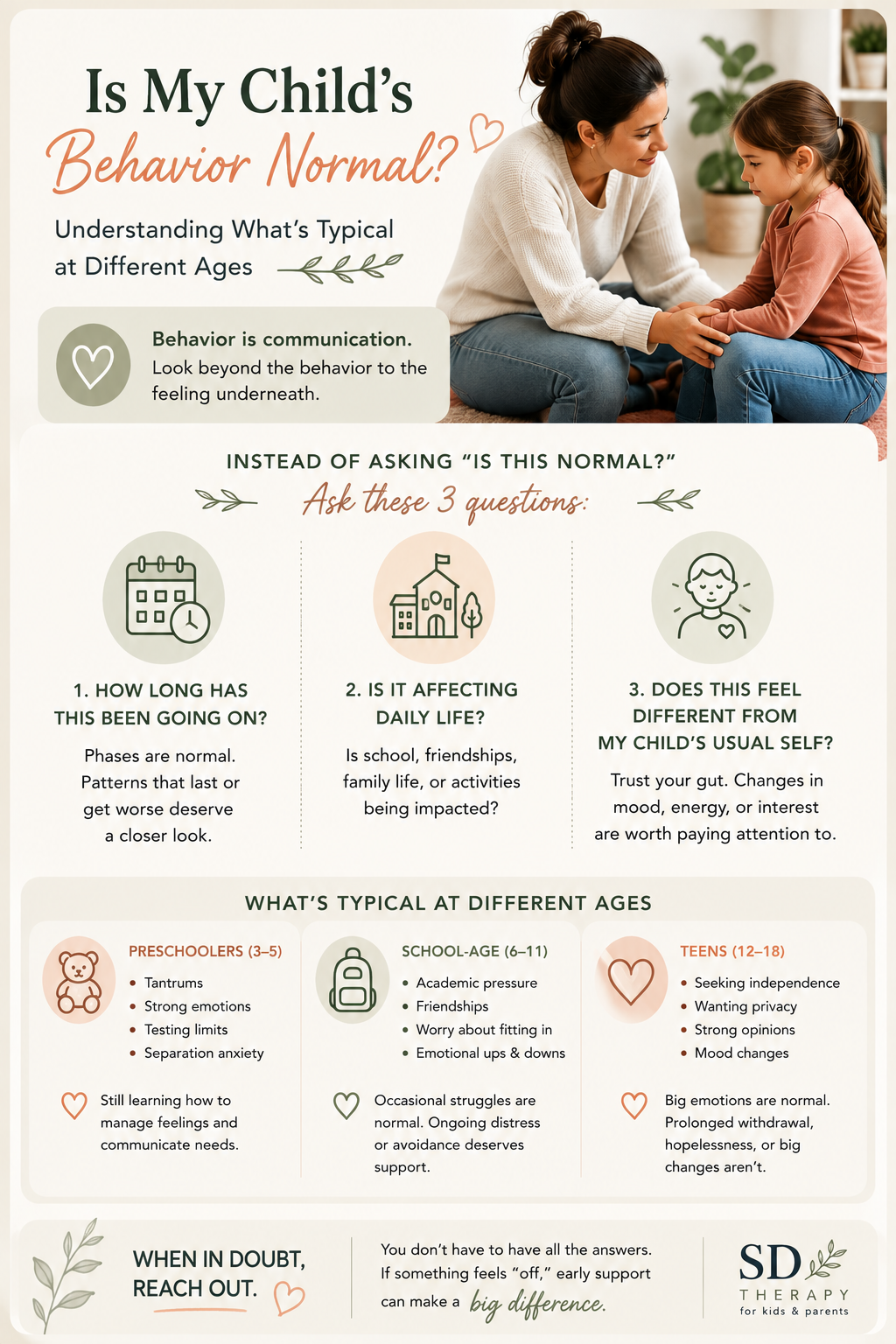
Behavior is rarely the real problem.
Children often communicate stress, anxiety, overwhelm, frustration, or unmet needs through their actions long before they can explain what’s happening with words.
Rather than focusing only on stopping behaviors, I help children understand their emotions, develop coping skills, strengthen confidence, and build healthier ways of responding to challenges.
At the same time, I work closely with parents so everyone is moving toward the same goals.
How Therapy Helps

✓ Understand how their brain works
✓ Break tasks into manageable steps
✓ Develop routines and systems that work
In executive functioning skills therapy, children and teens learn how to:
✓ Improve focus and reduce overwhelm
✓ Build independence and confidence.
✓ Strengthen problem-solving skills
With the right tools and support, your child can go from struggling every day to feeling capable and in control.
EXECUTIVE FUNCTIONING SKILLS THERAPY + PARENT SUPPORTParent Support Is Built Into The Process

While your child is learning new skills in therapy, you'll also have opportunities for guidance, support, and answers to your questions.

Regular Parent Check-Ins. Typically every 4–8 weeks, especially early on.

Guidance For Home Support with communication, boundaries, conflict, and school concerns.

Additional Support When Needed Parents are always welcome to schedule extra sessions.
When parents feel supported, kids tend to make progress faster.
Learn about how you can get extra parent support.
Resources For Parents
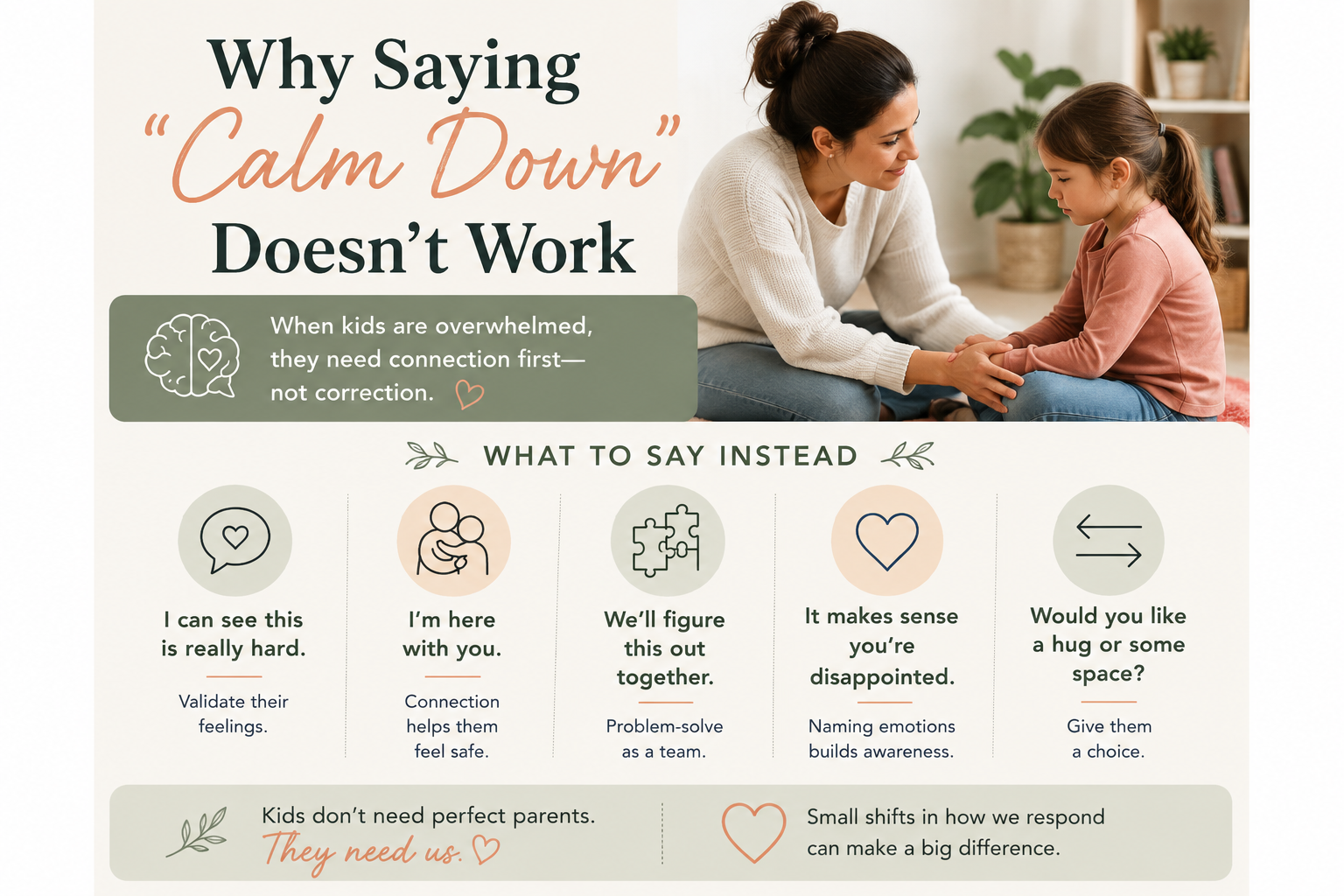
Looking for practical parenting strategies? Explore articles on ADHD, anxiety, emotional regulation, school challenges, and raising resilient children and teens.


What To Expect

Step 1
We’ll discuss your concerns, your child’s history, and what you’ve already tried.
Meet With Parents


Step 2
Understand What’s Driving The Behavior
Together, we’ll identify the patterns, stressors, and underlying factors contributing to your child’s struggles.

Step 3
Build Skills & Confidence
Your child learns practical tools while you receive guidance to support progress at home.
Questions You Might Have
If your question isn’t answered here, you’re always welcome to book a free parent consultation - no question is too big or too small, and we’ll figure out together what your child needs.
-
Executive functioning skills are the mental skills that help children and teens plan, organize, manage time, remember information, control impulses, regulate emotions, and follow through on tasks. These skills affect success at home, school, friendships, and everyday responsibilities.
-
Children and teens with executive functioning challenges often appear bright and capable but struggle with daily tasks. Common signs include forgetting homework, losing belongings, procrastinating, difficulty getting started, poor time management, emotional frustration, disorganization, and needing constant reminders from parents.
-
Many parents wonder whether their child is simply not listening. In reality, executive functioning challenges can affect working memory, task initiation, and follow-through. Your child may genuinely intend to complete a task but struggle to remember, organize, or act on it independently.
-
This is one of the most common concerns parents have. Intelligence and executive functioning are not the same thing. A child can be highly intelligent while still struggling with planning, organization, time management, emotional regulation, and completing everyday responsibilities.
-
Not necessarily. Many children with ADHD struggle with executive functioning because ADHD affects the brain's self-management systems. However, children without ADHD can also experience executive functioning challenges. Difficulties with organization, planning, procrastination, and follow-through can occur with or without an ADHD diagnosis. Learn more about ADHD Therapy here.
-
Procrastination is often misunderstood. Many children and teens are not avoiding tasks because they are lazy. They may feel overwhelmed, unsure where to start, worried about making mistakes, or lack the executive functioning skills needed to break large tasks into manageable steps. Procrastination is often more than poor time management, it can also be a symptom of perfectionism.
-
Executive functioning skills are heavily involved in academic success. Children must remember assignments, plan ahead, organize materials, manage time, stay focused, and complete tasks independently. When these skills are underdeveloped, even simple assignments can feel overwhelming.
-
Yes. Executive functioning skills can improve with practice, support, and effective strategies. Children and teens can learn how to plan ahead, manage time, organize tasks, improve follow-through, reduce overwhelm, and become more independent over time.
-
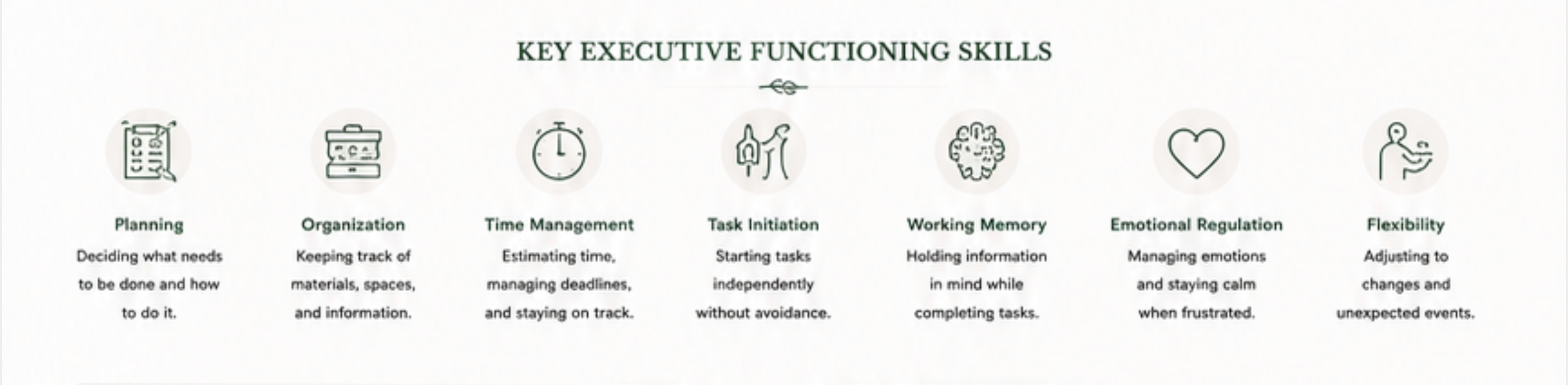
Executive functioning includes several important skills, including:
• Planning and prioritization
• Organization
• Time management
• Task initiation
• Working memory
• Emotional regulation
• Flexible thinking
• Impulse control
• Sustained attention
These skills work together to support success in school, relationships, and daily life.
-
Many children with executive functioning difficulties struggle to accurately estimate time, prioritize tasks, and get started. Deadlines often create urgency that helps activate focus and motivation. Therapy helps children develop systems that reduce last-minute stress and improve follow-through.
-
Absolutely. Children who repeatedly forget assignments, miss deadlines, lose belongings, or struggle to stay organized often begin to believe something is wrong with them. Over time, this can impact confidence, motivation, and self-worth. Therapy helps children build skills while also strengthening confidence and resilience.
-
Tutoring focuses primarily on academic content. Executive functioning therapy focuses on the underlying skills that support success across all subjects and areas of life. The goal is not simply completing today's homework but helping children build lifelong skills for independence, organization, and self-management.
-
Some children naturally develop stronger executive functioning skills as they mature. However, many continue to struggle without support. Early intervention can help children learn effective strategies before challenges begin affecting confidence, school performance, and family relationships.
-
Yes. Parents play an important role in supporting executive functioning growth. Therapy often includes parent guidance and practical strategies to help children apply new skills at home, school, and in everyday routines. To learn more about parenting support, click here.
-
Parents often report:
✓ Less nagging and reminding
✓ Better organization
✓ Improved follow-through
✓ More independence
✓ Reduced homework battles
✓ Increased confidence
✓ Better emotional regulation
✓ Less daily stress at home
While every child is different, the goal is to help your child develop skills that support success both now and in the future.
Let's Figure Out What’s Really Going On

Dr. Lindsay O'Shea, PhD
Licensed Psychologist
✓ Child Therapy
✓ Teen Therapy
✓ Parent Coaching
You don’t have to keep guessing, second-guessing, or handling this along.
Whether your child is struggling with anxiety, ADHD, emotional regulation, or challenging behaviors, we’ll work together to understand what’s beneath the behavior and create a path forward.
Confidential & Safe Your privacy is always respected and protected.

Evidenced-Based Strategies backed by research that work.

Whole-Family Focused We support the entire family system.

Collaborative We’ll work together towards your goals.

Virtual & Convenient Coaching from the comfort of your own home.