

EMOTIONAL REGULATION THERAPY IN SAN DIEGOBig Emotions Don’t Mean Something Is Wrong.
Your child isn’t trying to be difficult.

They’re struggling with skills they haven’t learned yet. You don’t need to get it perfect. You just need a plan that works in the real world.
✓ Meltdowns
✓ Anger
✓ Frustration
✓ Emotional Overwhelm
Does Any Of This Sound Familiar?
If many of the challenges below sound familiar, you're not alone. Therapy gives kids and teens practical tools to manage big emotions, navigate challenges more effectively, and build skills that support them well into adulthood.

Your Child May:
✓ Have frequent meltdowns
✓ Become frustrated quickly
✓ Cry easily
✓ Have explosive reactions
✓ Struggle with transitions
✓ Shut down when overwhelmed
✓ Have difficulty calming down
✓ Seem emotionally “younger” than peers
Your Teen May:
✓ Become easily irritated
✓ Withdraw when upset
✓ Lash out emotionally
✓ Feel overwhelmed by stress
✓ Struggle to communicate feelings
✓ Have difficulty recovering from setbacks
Looking Beyond The Behavior

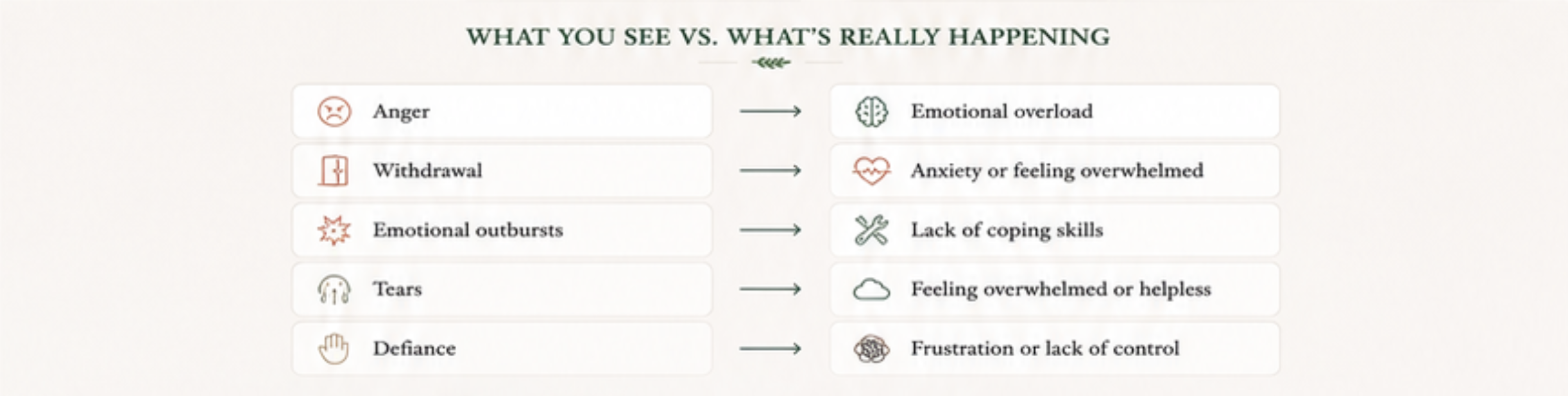
Behavior is rarely the real problem.
Children often communicate stress, anxiety, overwhelm, frustration, or unmet needs through their actions long before they can explain what’s happening with words.
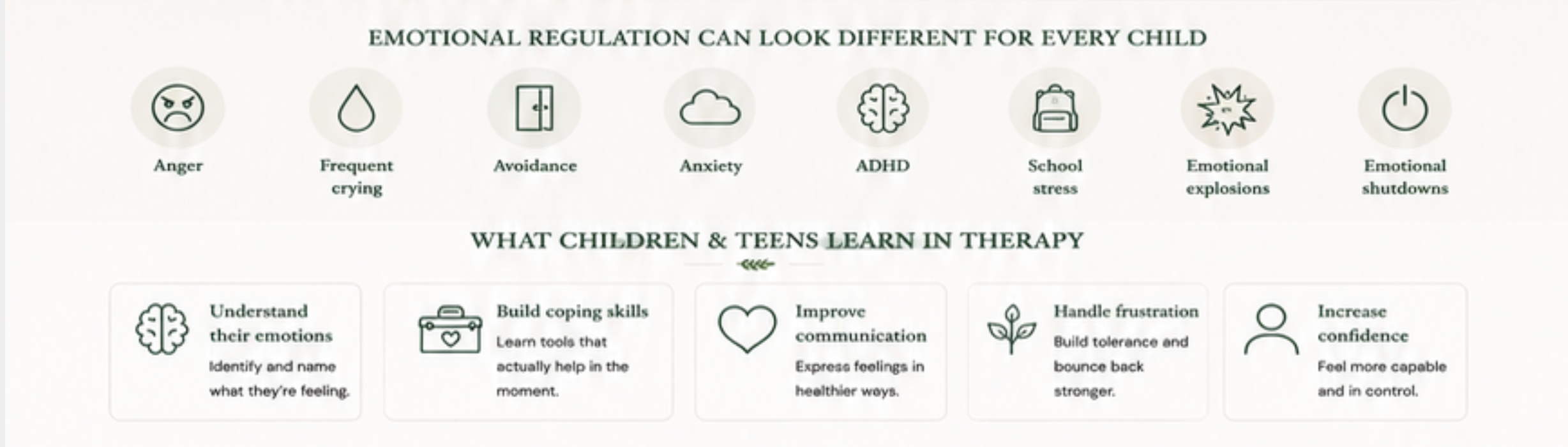
Rather than focusing only on stopping behaviors, I help children understand their emotions, develop coping skills, strengthen confidence, and build healthier ways of responding to challenges.
At the same time, I work closely with parents so everyone is moving toward the same goals.
TEEN THERAPY + PARENT SUPPORTParent Support Is Built Into The Process

Children and Teens need privacy, but parents still need support.
While therapy gives your child a space to talk openly and build confidence, you'll also have opportunities for guidance, answers to questions, and practical strategies you can use at home.

Regular Parent Check-Ins. Typically every 4–8 weeks, especially early on.

Guidance For Home Support with communication, boundaries, conflict, and school concerns.

Additional Support When Needed Parents are always welcome to schedule extra sessions.
When parents feel supported, children and teens tend to make progress faster.
What To Expect

Step 1
We’ll discuss your concerns, your child’s history, and what you’ve already tried.
Meet With Parents


Step 2
Understand What’s Driving The Behavior
Together, we’ll identify the patterns, stressors, and underlying factors contributing to your child’s struggles.

Step 3
Build Skills & Confidence
Your child learns practical tools while you receive guidance to support progress at home.
Resources For Parents
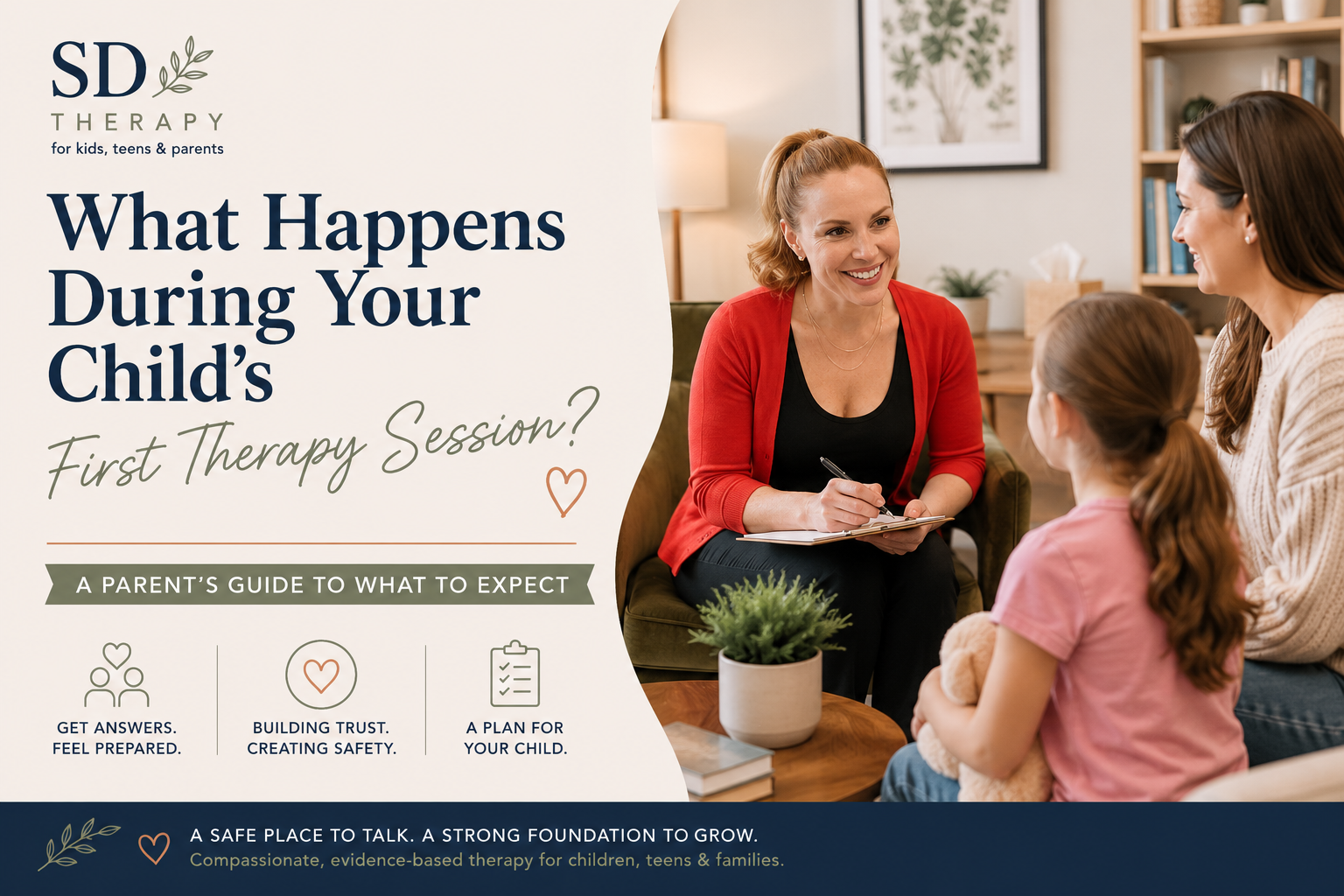
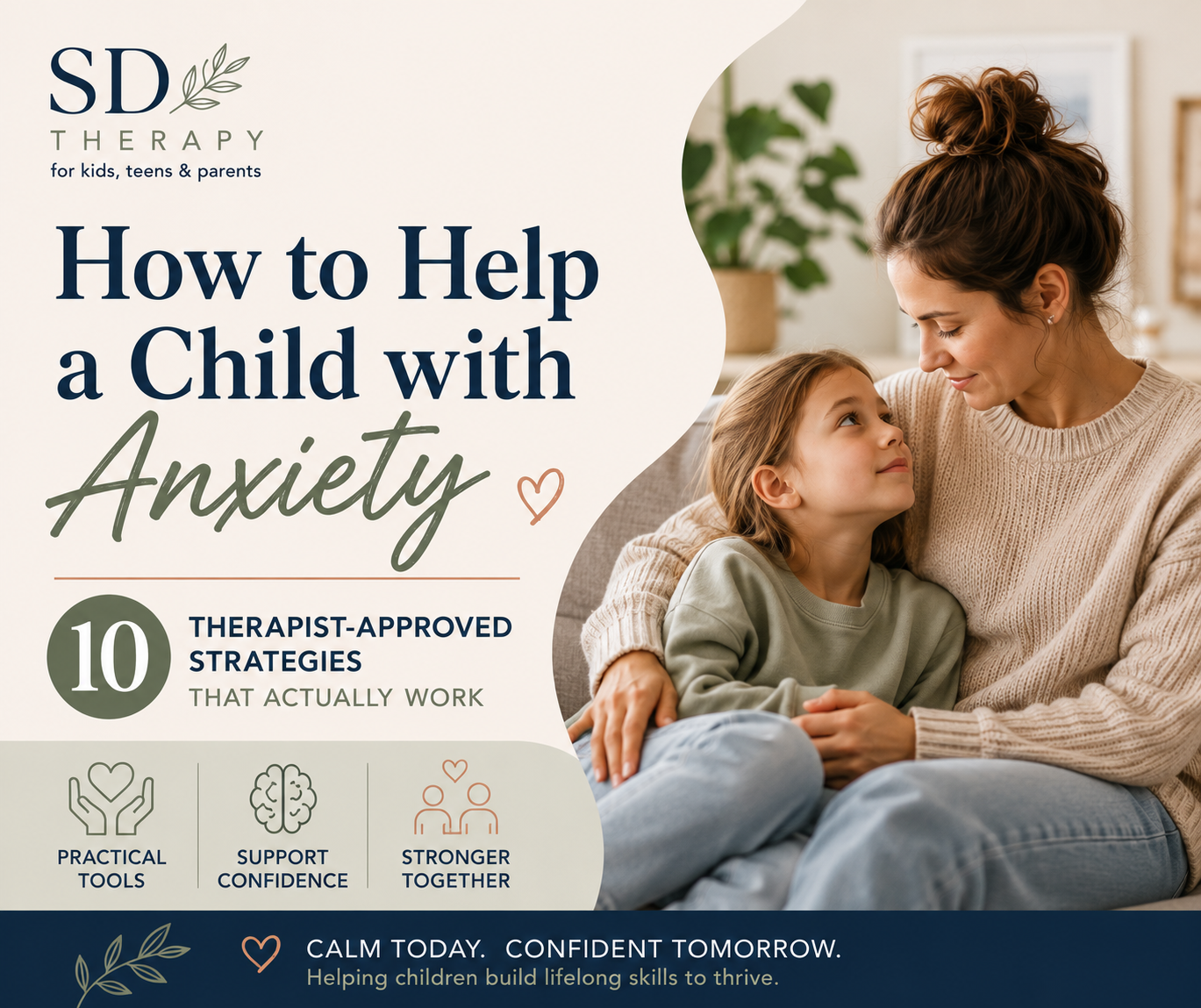
Looking for practical parenting strategies? Explore articles on ADHD, anxiety, emotional regulation, school challenges, and raising resilient children and teens.
Questions You Might Have
If your question isn’t answered here, you’re always welcome to book a free parent consultation - no question is too big or too small, and we’ll figure out together what your child needs.
-
When a child has difficulty regulating emotions, seemingly small events can feel much bigger internally than they appear from the outside. What may look like an overreaction is often a sign that your child feels overwhelmed, frustrated, anxious, or lacks the skills needed to cope effectively in that moment. Therapy helps children develop the tools to manage those emotions more successfully.
-
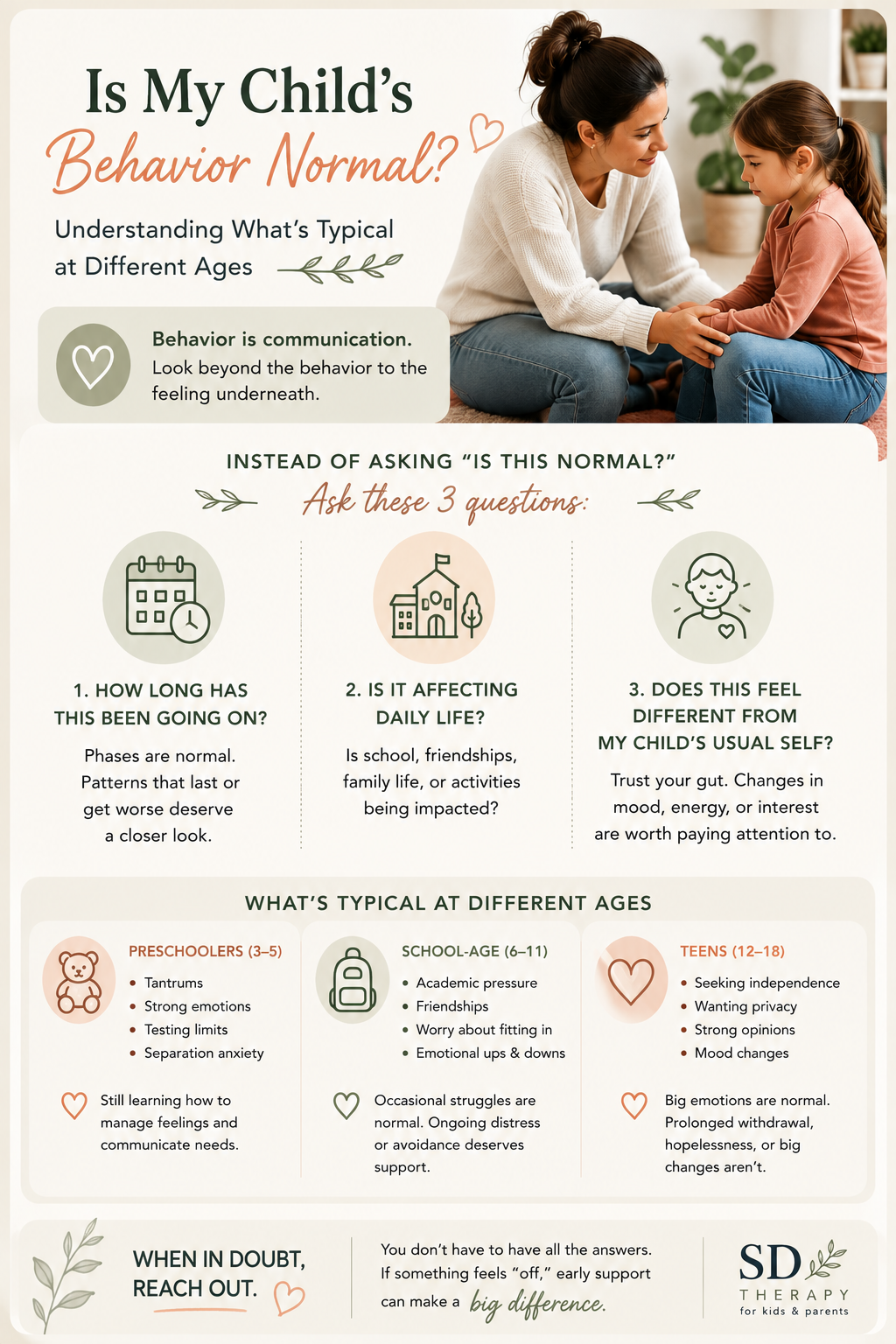
All children experience strong emotions from time to time. The difference is frequency, intensity, and recovery time. If your child's emotional reactions are happening often, seem much bigger than expected for their age, or significantly impact family life, school, friendships, or daily functioning, additional support may be helpful.
-
Many children work extremely hard to hold themselves together throughout the school day. By the time they get home, they are mentally and emotionally exhausted. Home often feels like the safest place to release the emotions they've been suppressing all day. This is common among children experiencing anxiety, ADHD, perfectionism, sensory sensitivities, and emotional regulation challenges.
-
Anger is often a secondary emotion. Underneath the anger may be frustration, disappointment, anxiety, embarrassment, overwhelm, sadness, or feeling misunderstood. Therapy helps children identify what is driving the emotional reaction so they can respond more effectively.
-
Yes. Emotional regulation is a skill set, not a personality trait. Children can learn how to identify emotions, tolerate frustration, calm their bodies, communicate their needs, and recover from stressful situations. These skills improve with practice and support.
-
Sometimes. Many children and teens with ADHD struggle with emotional regulation because ADHD affects executive functioning skills, including impulse control, frustration tolerance, and emotional self-management. Emotional outbursts, intense reactions, and difficulty calming down are common ADHD-related challenges. You can learn more about ADHD Therapy here.
-
Absolutely. Anxiety does not always look like worry or fear. In children and teens, anxiety can show up as irritability, anger, avoidance, perfectionism, emotional shutdowns, tears, or explosive reactions. Sometimes what looks like a behavior problem is actually anxiety underneath. Learn more about child anxiety therapy and teen anxiety therapy.
-
This is one of the most common questions parents ask. While children still need structure, expectations, and accountability, emotional regulation difficulties often involve skill deficits rather than willful misbehavior. Therapy helps identify whether behavior is primarily driven by emotional overwhelm, developmental challenges, anxiety, ADHD, or other contributing factors.
-
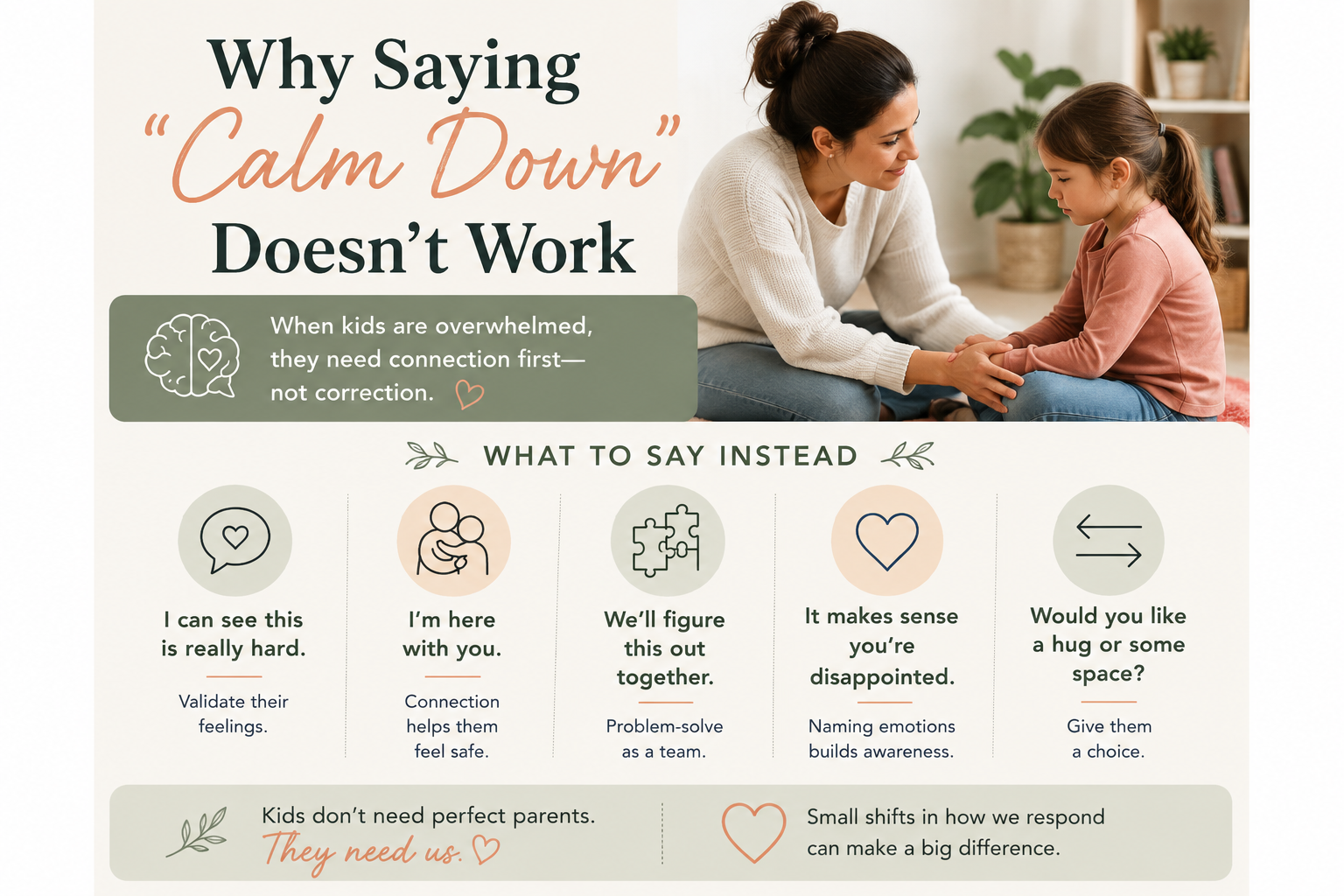
When children are emotionally flooded, they are often unable to access logic, problem-solving, or learning. The immediate goal is helping your child regain regulation and emotional safety. Once they are calm, they are much more able to reflect, learn, and make changes. Therapy can help parents develop effective strategies for responding during these difficult moments. Learn more about parent support.
-
Some children improve as they mature, but many continue to struggle without support. Learning emotional regulation skills early can help children build confidence, strengthen relationships, improve coping abilities, and reduce future difficulties at home, school, and in social situations.
-
Yes. Parents play an important role in helping children practice and apply emotional regulation skills outside of sessions. Depending on your child's age and needs, therapy may include parent consultation, coaching, and collaboration to support progress at home.
-
Yes. Emotional regulation challenges can affect children, adolescents, and teens in different ways. Therapy is tailored to your child's developmental stage, strengths, and specific concerns.
Let's Figure Out What’s Really Going On

Dr. Lindsay O'Shea, PhD
Licensed Psychologist
✓ Child Therapy
✓ Teen Therapy
✓ Parent Coaching
You don’t have to keep guessing, second-guessing, or handling this along.
Whether your child is struggling with anxiety, ADHD, emotional regulation, or challenging behaviors, we’ll work together to understand what’s beneath the behavior and create a path forward.
Confidential & Safe Your privacy is always respected and protected.

Evidenced-Based Strategies backed by research that work.

Whole-Family Focused We support the entire family system.

Collaborative We’ll work together towards your goals.

Virtual & Convenient Coaching from the comfort of your own home.