

ADHD THERAPYHelping Children & Teens With ADHD Reach Their Potential With Confidence

ADHD isn’t about not trying - it’s about having the right support, tools, and strategies to succeed.
Does Any Of This Sound Familiar?
Your Child May:
✓ Start tasks but rarely finish them
✓ Lose homework, backpacks, jackets, or water bottles
✓ Need constant reminders
✓ Recovery after a meltdown is tough
✓ Become easily distracted
✓ Struggle with organization
✓ Have big emotional reactions
✓ Become frustrated quickly
✓ Anger easily
Your Teen May:
✓ Miss assignments despite being smart
✓ Procrastinate until the last minute
✓ Feel overwhelmed by responsibilities
✓ Struggle with time management

✓ Have difficulty getting started
✓ Feel anxious about school performance
✓ Battle low self-confidence
If you’re feeling frustrated…
You’re not failing. And your child isn’t lazy.
Most families I work with are doing everything they know how to do. They simply haven’t been given the tools that work with an ADHD brain.
ADHD Looks Different In Every Child & Teen
ADHD can show up differently in males and females. I wrote a parent blog post about the 10 signs of ADHD in girls that often get missed.

Inattention
Difficulty focusing, staying on task, or remembering things.

Hyperactivity
Always on the go, restlessness, or difficulty sitting still.

Impulsivity
Acting without thinking, interrupting, or difficulty waiting.

Emotional Regulation
Big emotions, quick frustration, or meltdowns can be common.

Executive Functioning
Planning, organizing, time management, and staying on track.
Why Does ADHD Make Everyday Tasks Feel So Hard?
ADHD affects executive functioning skills like planning, focus, organization, and follow-through. ADHD is neurodevelopmental and not caused by parenting.
ADHD can be influenced by:


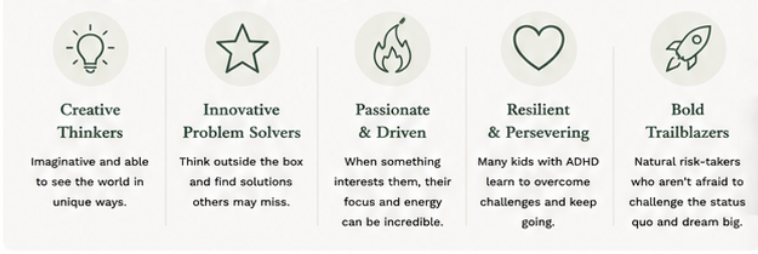
ADHD Is More Than The Challenges You See
ADHD brains are wired differently - and that difference comes with incredible strengths. When supported with understanding and the right tools, these strengths can shine.

How ADHD Therapy Helps
In ADHD Therapy Children Learn To:
✓ Understand how their brain works
✓ Build confidence
✓ Improve emotional regulation
✓ Develop coping skills
✓ Strengthen executive functioning
✓ Reduce frustration
With Parent Meetings, Parents Learn To:
✓ Better understand ADHD
✓ Reduce power struggles
✓ Create effective routines
✓ Improve communication
✓ Support progress at home
ADHD is a difference, not a deficit. With the right support, your child can thrive!
Looking Beyond The Behavior

ADHD is not a character flaw.
It's a difference in how the brain processes information, manages attention, and regulates behavior.
Instead of focusing on what's "wrong," we focus on understanding your child's strengths, challenges, and unique needs.
Together we'll identify practical strategies that help your child succeed at home, school, and in everyday life.

The Goal Isn’t to “Fix” Your Child
Your child does not need to become someone else. The goal is to help them understand how their brain works, build skills for areas that feel difficulty, and learn how to use their strengths with confidence.

When children understand both their challenges and their gifts, they often stop seeing themselves as “lazy,” “behind,” or “not good enough.” Instead they begin to see themselves more accurately: as capable, intelligent, and uniquely wired.
And That Shift Can Change Everything.
What Actually Helps Kids With ADHD
Kids with ADHD usually do best when we focus on regulation first, then skills, not the other way around. In therapy and parent sessions, we work on tools you can actually use during real-life moments, not just ideas that sound good.

Here are some examples of what Dr. Lindsay can help you with:
Co-regulation before correction so your child’s nervous system is calmer before you problem-solve.
Clear, simple expectations instead of long explanations they can’t hold in mind.
Consistent structure and routines that reduce daily decision fatigue for everyone.
Breaking tasks into smaller steps so things like homework and chores feel doable.
Teaching specific skills (emotional language, coping tools, planning) instead of only reacting to behavior.
How Therapy Supports Your Child And You
Therapy focuses on helping your child function better and feel better, not on “fixing” who they are. I work directly with children and teens on emotional regulation, impulse control, confidence, and coping tools, while also helping you respond in ways that reduce conflict and create more steadiness at home.
Our work may focus on:
Emotional regulation skills so your child has more than one way to handle big feelings.
Impulse control strategies that are realistic for their age and brain.
Support with frustration, transitions, and routines (mornings, homework, screens, bedtime).
Ongoing parent coaching and guidance so you know what to do between sessions.
Building confidence and self-esteem, especially if your child has started calling themselves “lazy,” “stupid,” or “bad.”

Dr. Lindsay offers walk-and-therapy sessions, which is incredibly helpful for ADHD kids and teens!
Learn more about my approach to therapy here.
TEEN THERAPY + PARENT SUPPORTParent Support Is Built Into The Process

Teens need privacy, but parents still need support.
While therapy gives your teen a space to talk openly and build confidence, you'll also have opportunities for guidance, answers to questions, and practical strategies you can use at home.

Regular Parent Check-Ins. Typically every 4–8 weeks, especially early on.

Guidance For Home Support with communication, boundaries, conflict, and school concerns.

Additional Support When Needed Parents are always welcome to schedule extra sessions.
When parents feel supported, children & teens tend to make progress faster.
What To Expect

Step 1
We’ll discuss your concerns, your child’s history, and what you’ve already tried.
Meet With Parents


Step 2
Understand What’s Driving The Behavior
Together, we’ll identify the patterns, stressors, and underlying factors contributing to your child’s struggles.

Step 3
Build Skills & Confidence
Your child learns practical tools while you receive guidance to support progress at home.
Resources For Parents
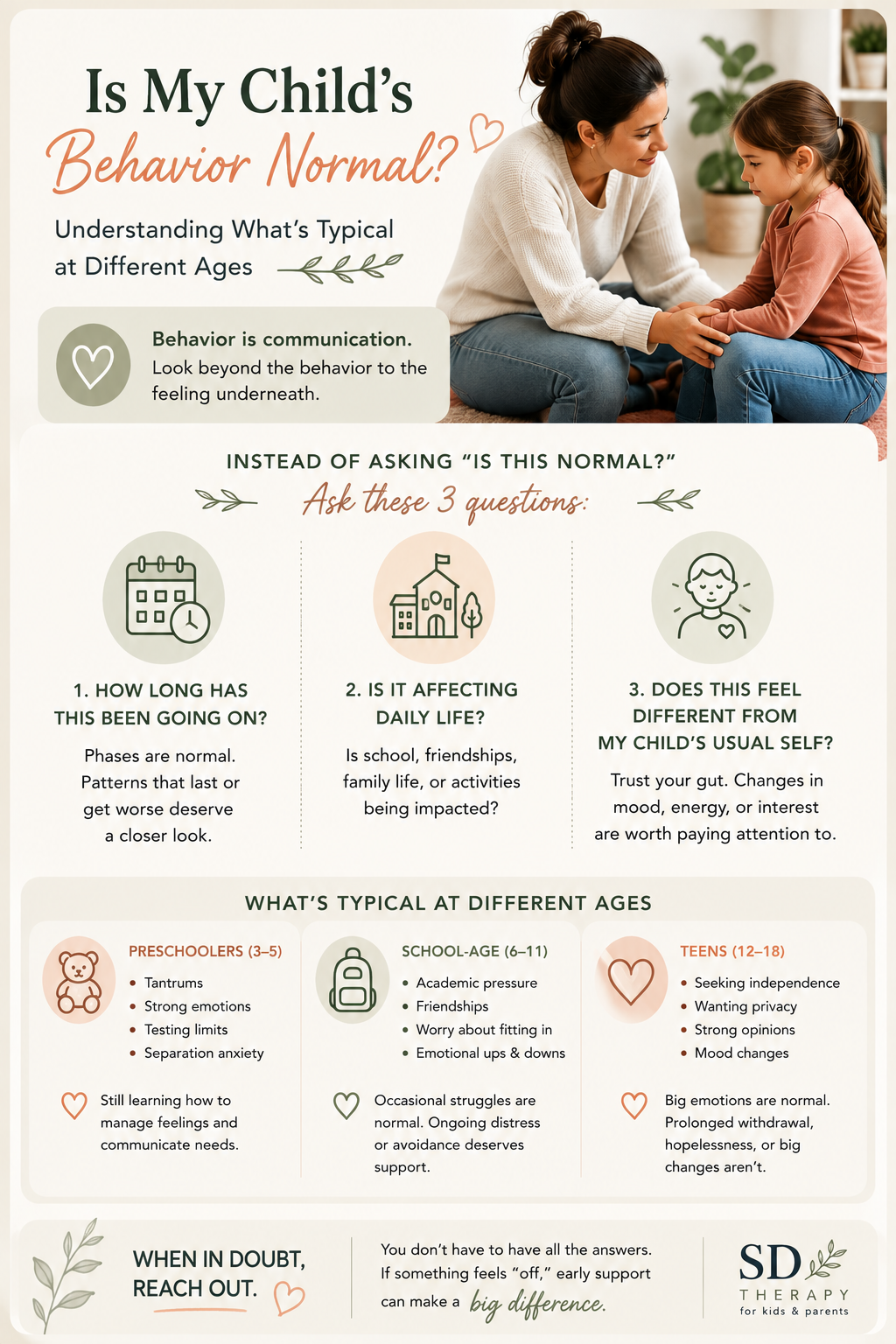
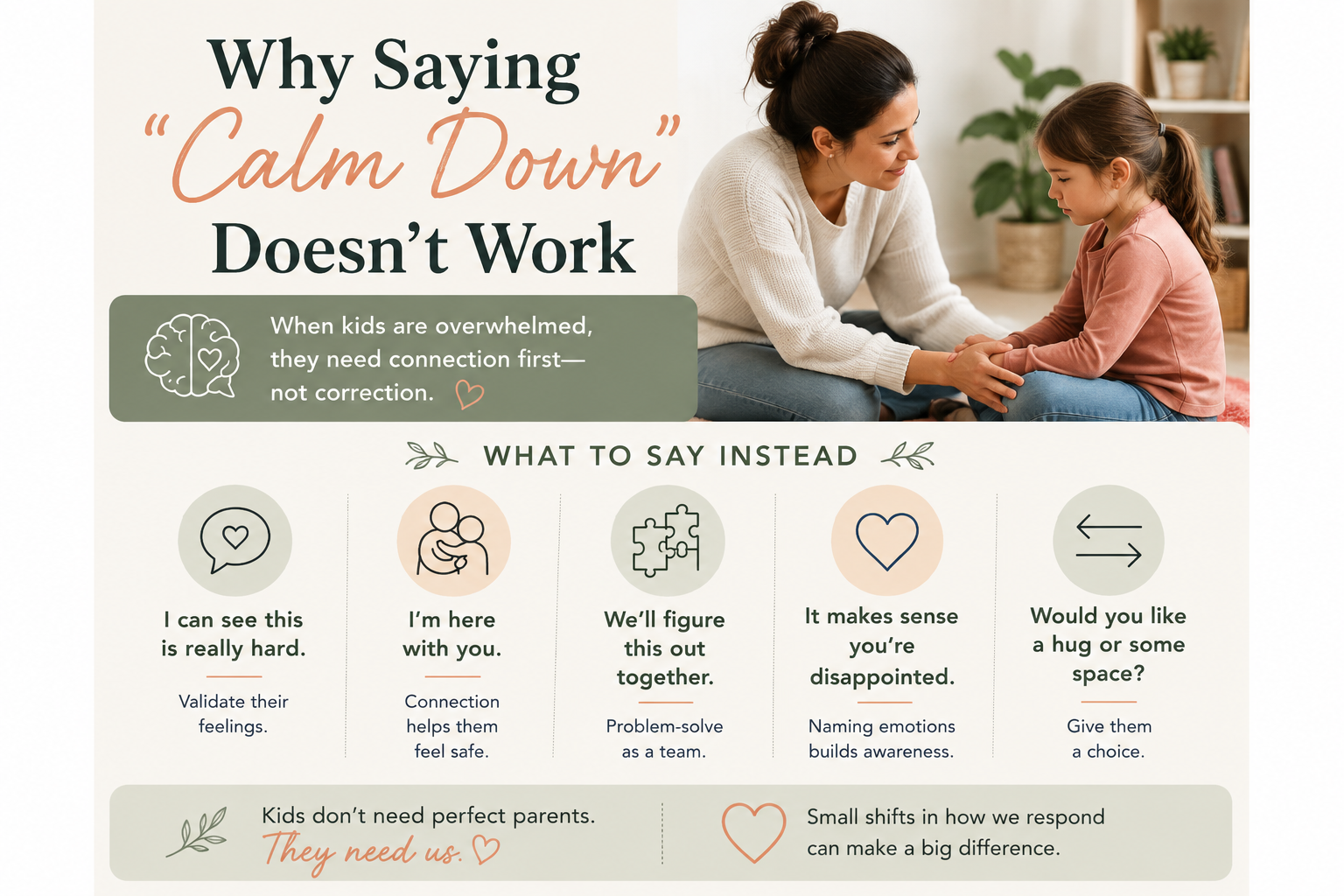
Looking for practical parenting strategies? Explore articles on ADHD, anxiety, emotional regulation, school challenges, and raising resilient children and teens.


Questions You Might Have
If your question isn’t answered here, you’re always welcome to book a free parent consultation - no question is too big or too small, and we’ll figure out together what your child needs.
-
ADHD therapy helps your child understand their brain, calm their body, and practice tools for focus and emotional regulation in a supportive, non‑shaming environment. In my San Diego practice, I work with kids and teens on emotional regulation, impulse control, frustration tolerance, and real‑life routines like homework, mornings, and screen time.
Sessions are active and practical, not just talking. Your child learns specific skills they can use at home and school, while you receive clear guidance on what to do between sessions so you are not guessing. Many families notice less conflict, more confidence, and a calmer feel at home over time.
If you want to talk through how ADHD therapy might help your specific child, you can book a free 20‑minute parent consultation.
-
Common signs of ADHD in children and teens include difficulty focusing, getting easily distracted, forgetting instructions, and struggling to start or finish tasks, especially when they are boring or challenging. Many kids also have big emotional reactions, frequent meltdowns, or power struggles around homework, mornings, and transitions.
You might notice your child is bright but disorganized, loses things often, talks or moves a lot, or has a hard time pausing before they act. Some kids look more “daydreamy” and withdrawn, while others are more obviously hyperactive and impulsive.
If you’re unsure whether what you’re seeing is typical or possibly ADHD, a free parent consultation can help you sort through your questions and next steps for assessment or support.
-
Yes. I use behavioral strategies for ADHD alongside emotional regulation and nervous system support. Kids with ADHD usually need both: clear structure and expectations, and help calming their bodies and brains so they can actually use the strategies we put in place.
In ADHD therapy, I help families create simple routines, visual supports, and realistic rewards and consequences that fit your child’s age and ADHD profile. We focus on what is doable for your family, not a rigid one‑size‑fits‑all program.
During your free parent consultation, we can talk about what you’ve already tried - rewards charts, consequences, reminders - and tailor a plan that feels more effective and sustainable
-
Parent coaching can make a big difference in how ADHD feels at home. Many parents tell me they feel like they’ve tried everything - reminders, charts, consequences -and are still burned out and unsure what actually helps.
In parent coaching sessions, we focus on specific situations like homework battles, screen time, morning routines, and bedtime. I help you understand what is driving your child’s behavior, what is realistic to expect with ADHD, and how to respond in ways that reduce conflict and support your child’s nervous system.
Parent coaching is available in‑person in Cardiff‑by‑the‑Sea (San Diego) and virtually throughout California, Colorado, and Utah, so you can get support even on busy weeks. We can talk about what parent support might look like for you during a free 20‑minute parent consultation.
You can learn more about parent coaching here.
-
ADHD therapy is not a replacement for medication, but it can be a powerful complement - and in some cases, an alternative when medication is not recommended or not preferred. I do not prescribe medication, but I regularly collaborate with pediatricians and psychiatrists when families choose to explore that option.
Therapy focuses on skills, routines, and emotional support: helping your child manage big feelings, build executive functioning skills, and reduce daily conflict at home and school. For some kids, therapy alone provides enough support; for others, a combination of medication plus ADHD therapy works best.
If you’re unsure whether to consider medication, we can talk through your questions, values, and options in a free parent consultation, and I can help you think about what next steps make sense for your family.
-
Yes. ADHD in girls is often easier to miss because it may not look like the stereotypical image many people associate with ADHD. Rather than being highly disruptive or hyperactive, girls are more likely to appear daydreamy, forgetful, emotional, overwhelmed, perfectionistic, or anxious. Many girls work incredibly hard to compensate for their struggles, which can delay recognition and support. If your daughter seems bright and capable but consistently struggles with organization, attention, emotional regulation, or self-esteem, an evaluation may help clarify whether ADHD could be contributing to these challenges. I wrote an article on the 10 signs of ADHD in girls that often get missed. You. can read it here.
Let's Figure Out What’s Really Going On

Dr. Lindsay O'Shea, PhD
Licensed Psychologist
✓ Child Therapy
✓ Teen Therapy
✓ Parent Coaching
You don’t have to keep guessing, second-guessing, or handling this along.
Whether your child is struggling with anxiety, ADHD, emotional regulation, or challenging behaviors, we’ll work together to understand what’s beneath the behavior and create a path forward.