

ADHD Emotional Dysregulation: Why Small Problems Cause Big Reactions in Kids
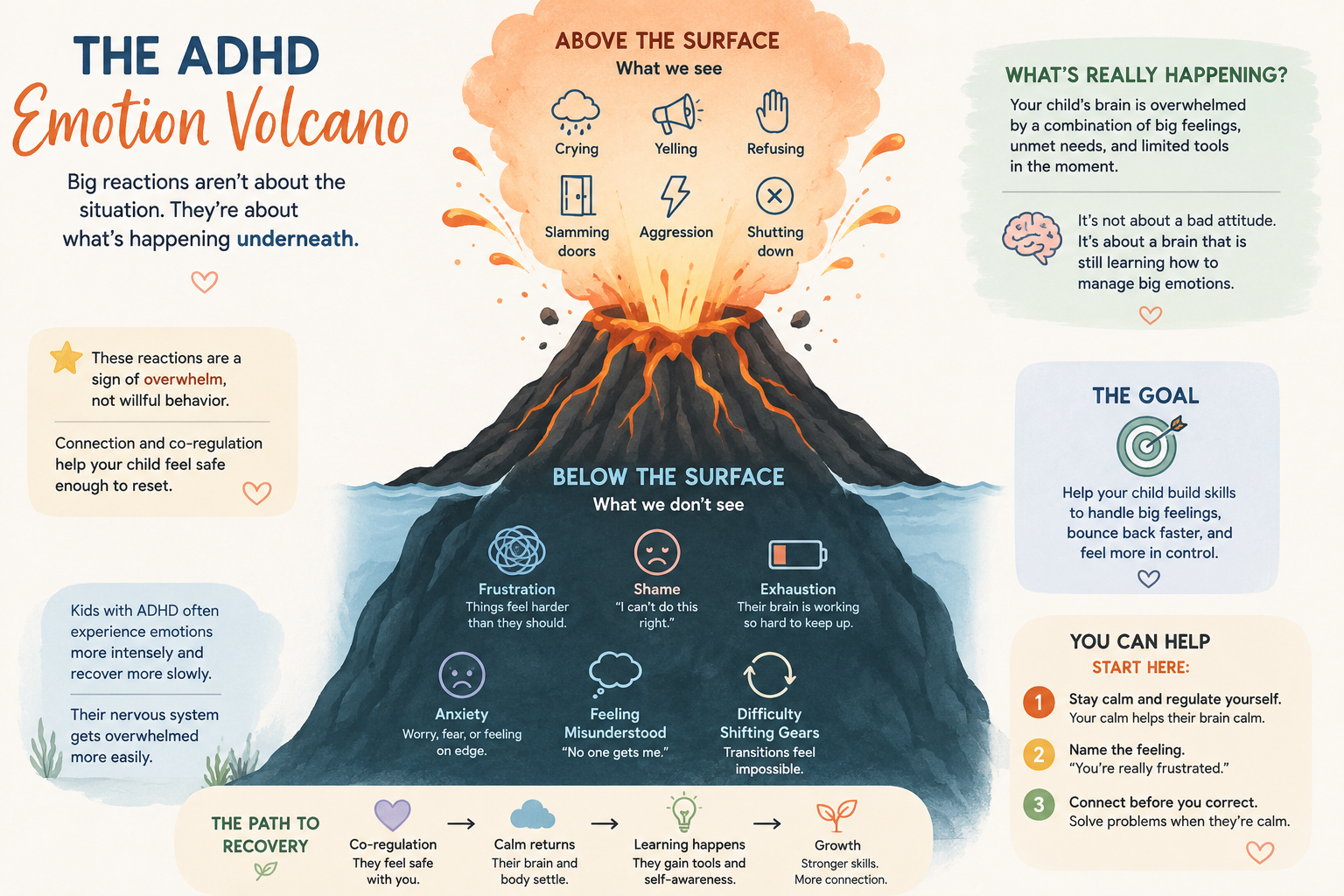
ADHD Emotion Volcano, Dr. Lindsay O’Shea
If your child has ADHD and seems to go from calm to furious in seconds, you're not imagining it.
Many children with ADHD struggle with emotional dysregulation, which means they have difficulty managing big feelings such as frustration, disappointment, anger, embarrassment, or overwhelm. Research increasingly suggests that emotional dysregulation is a common and important part of ADHD, not simply "bad behavior" or poor parenting.
The good news? Emotional regulation is a skill that can be taught and strengthened.
What Is Emotional Dysregulation?
Emotional dysregulation happens when a child's emotional response is much bigger, stronger, or longer-lasting than the situation might seem to warrant.
Parents often describe it as:
"He goes from 0 to 100."
"She melts down over tiny things."
"Once he's upset, it's impossible to calm him down."
"She takes forever to recover after getting frustrated."
These reactions are not intentional. For many children with ADHD, the parts of the brain responsible for emotional control and executive functioning are still developing and may work differently.
Emotional outbursts can sometimes be confused with anxiety, especially when children appear overwhelmed or highly reactive. Read ADHD vs. Anxiety in Children: How Parents Can Tell the Difference.
Signs of Emotional Dysregulation in Children With ADHD
Your child may:
Have intense meltdowns over small disappointments
Become easily frustrated during homework
Struggle when plans change unexpectedly
Have difficulty accepting "no"
React strongly to criticism or correction
Stay upset long after an event is over
Become overwhelmed by transitions
Have explosive reactions that seem out of proportion
Many parents tell me:
"I know they're capable of handling this. Why does it feel so hard?"
The answer is often that the emotional demand of the moment exceeds the child's current regulation skills.
Emotional dysregulation is often most noticeable after school, when children are mentally exhausted from managing expectations throughout the day. Learn more in Why Kids Melt Down After School.
Why Does ADHD Affect Emotions?
Most people think ADHD is only about attention.
But ADHD also affects:
Impulse control
Frustration tolerance
Emotional self-management
Executive functioning
Research increasingly shows that emotional dysregulation may be a core feature of ADHD for many children. Some newer research even suggests there may be a subgroup of children whose ADHD is characterized by particularly significant emotional challenges.
This means your child may:
Feel emotions more intensely
React more quickly
Have a harder time calming down
A Common Example
Imagine your child is working on homework.
They get one answer wrong.
Most children might feel mildly frustrated.
A child struggling with emotional dysregulation may experience:
Frustration
Shame
Self-criticism
Anger
Complete shutdown
All within a matter of seconds.
What looks like "overreacting" is often a nervous system that has become overwhelmed.
A Simple Strategy Parents Can Use Tonight
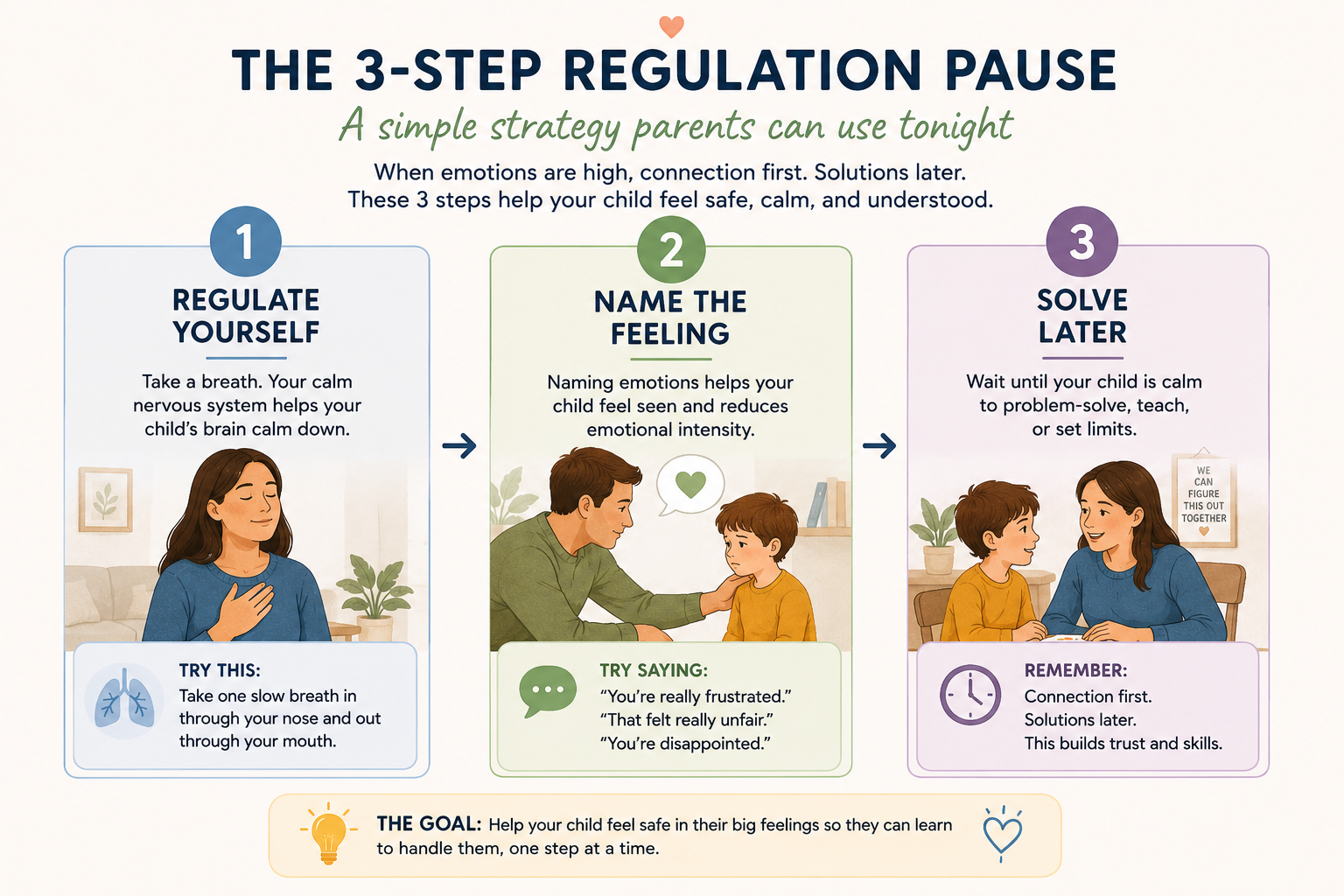
The 3-Step Regulation Pause
When your child is escalating:
Step 1: Regulate yourself first.
Take one slow breath before responding.
Children borrow our nervous systems. If we escalate, they usually escalate too.
Step 2: Name the feeling.
Try:
"You're really frustrated right now."
"That felt unfair."
"You're disappointed."
Naming emotions helps reduce emotional intensity.
Step 3: Solve later.
Avoid teaching, correcting, or problem-solving in the middle of a meltdown.
Connection first.
Solutions later.
Many parents are surprised to discover that the fastest way through a meltdown is often slowing down rather than trying harder to stop it.
What Doesn't Usually Help
During emotional flooding, children often struggle to process logic.
These common responses can accidentally make things worse:
"Calm down."
"You're overreacting."
"It's not a big deal."
Long lectures
Threats
Arguing about facts
When emotions are high, the thinking brain is often temporarily offline.
When Should Parents Seek Help?
Consider professional support if your child's emotional reactions:
Interfere with school success
Create significant family stress
Affect friendships
Lead to frequent conflicts
Cause your child distress
Occur alongside ADHD, anxiety, or behavioral concerns
Research shows that emotional dysregulation can affect family relationships, school functioning, and overall well-being, making early support especially valuable.
Frequently Asked Questions
Is emotional dysregulation a symptom of ADHD?
Many experts now view emotional dysregulation as a common feature of ADHD. Children with ADHD often have difficulty managing frustration, disappointment, and other strong emotions.
Is emotional dysregulation the same as a tantrum?
No. A tantrum is usually goal-directed. Emotional dysregulation occurs when a child becomes overwhelmed by emotions and struggles to regain control.
Can emotional regulation skills improve?
Yes. Children can learn emotional awareness, coping skills, problem-solving, and self-regulation strategies with practice and support. Psychosocial interventions have shown benefits for emotional symptoms in children with ADHD.
Does emotional dysregulation mean my child is being defiant?
Not necessarily. What appears to be defiance may actually be overwhelm, frustration, or difficulty regulating emotions.
The Bottom Line
If your child has ADHD and experiences intense emotional reactions, you're not alone.
Many children with ADHD struggle not only with attention and focus, but also with managing big feelings. Understanding emotional dysregulation through a skill-building lens rather than a behavior lens can help parents respond with more confidence, compassion, and effectiveness.
The goal isn't to eliminate emotions.
The goal is helping your child learn how to move through them successfully.